
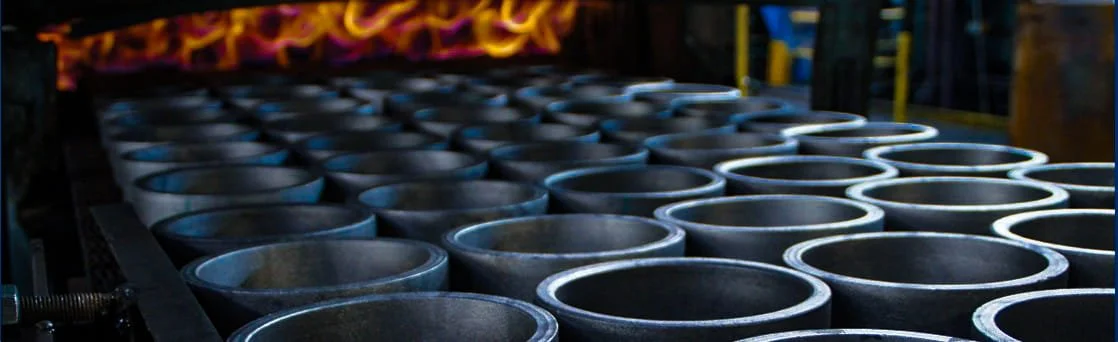
Boronizing - Heat Treatment
Boronizing (boriding) services create ultra-hard, wear-resistant surfaces on steel components for high-temperature, high-wear environments. Contact us to discuss your project and request a quote.
Boronizing Overview
What is Boronizing and its benefits?
Boriding (Boronizing) is a thermochemical surface-hardening process in which a component is packed in boron-bearing powder media and processed at high temperatures (750–950°C), at which point boron diffuses onto the metal surface, creating a complex intermetallic compound resulting in a hard, well-anchored, peripheral surface layer consisting of Fe2B and other compounds. The final boronizing coating increases surface hardness (up to 2000 HV), reduces friction, and extends service life compared to other coating processes, including nitriding, carburizing, chrome plating, CVD, and PVD.
Which materials & components can and cannot be boronized?
Recommended materials for boronizing include cast iron, cast steel, most steel grades, nickel-based alloys, and special materials such as Stellite, because they maintain structural integrity at high temperatures. Materials with high silicon or aluminum content are not suitable candidates, as these elements interfere with boron diffusion kinetics and increase the risk of dimensional distortion at processing temperatures.
What factors should be considered when selecting boronizing heat treatment?
Project owners must account for two factors when specifying boronizing. Firstly, the substrate material must withstand high curing temperatures (750-950°C). Secondly, ensure that the selected coating applicator's curing oven can accommodate the component before fabrication. Boronizing capabilities vary by shop. Custom Coatings International's boronizing basket size measures 4' L, 2'3" W, and 1' H, allowing CCI to work on small to medium-sized components. Project owners should also have components designed to final dimensions before treatment, as post-process machining requires specialized tooling.
Why choose Custom Coatings International?
In industries where coating failures can drive excessive repair and maintenance costs, choosing an experienced, proven applicator is critical. With over 30 years of experience applying protective coatings and references including Baker Hughes, CCI has earned a reputation for delivering high-quality coating finishes on time and to specification. Contact us to request a quote or discuss your application.
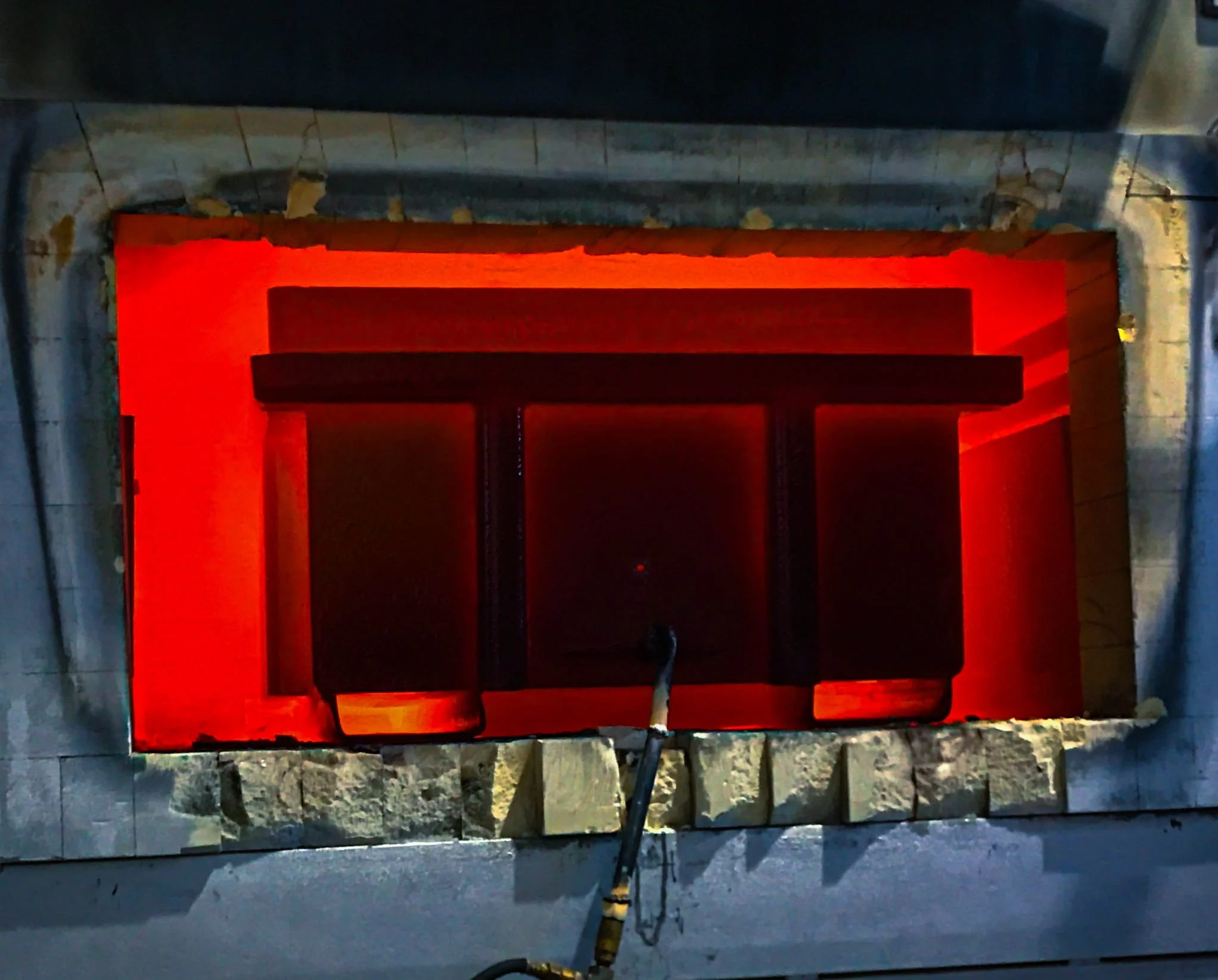
Boronizing Materials
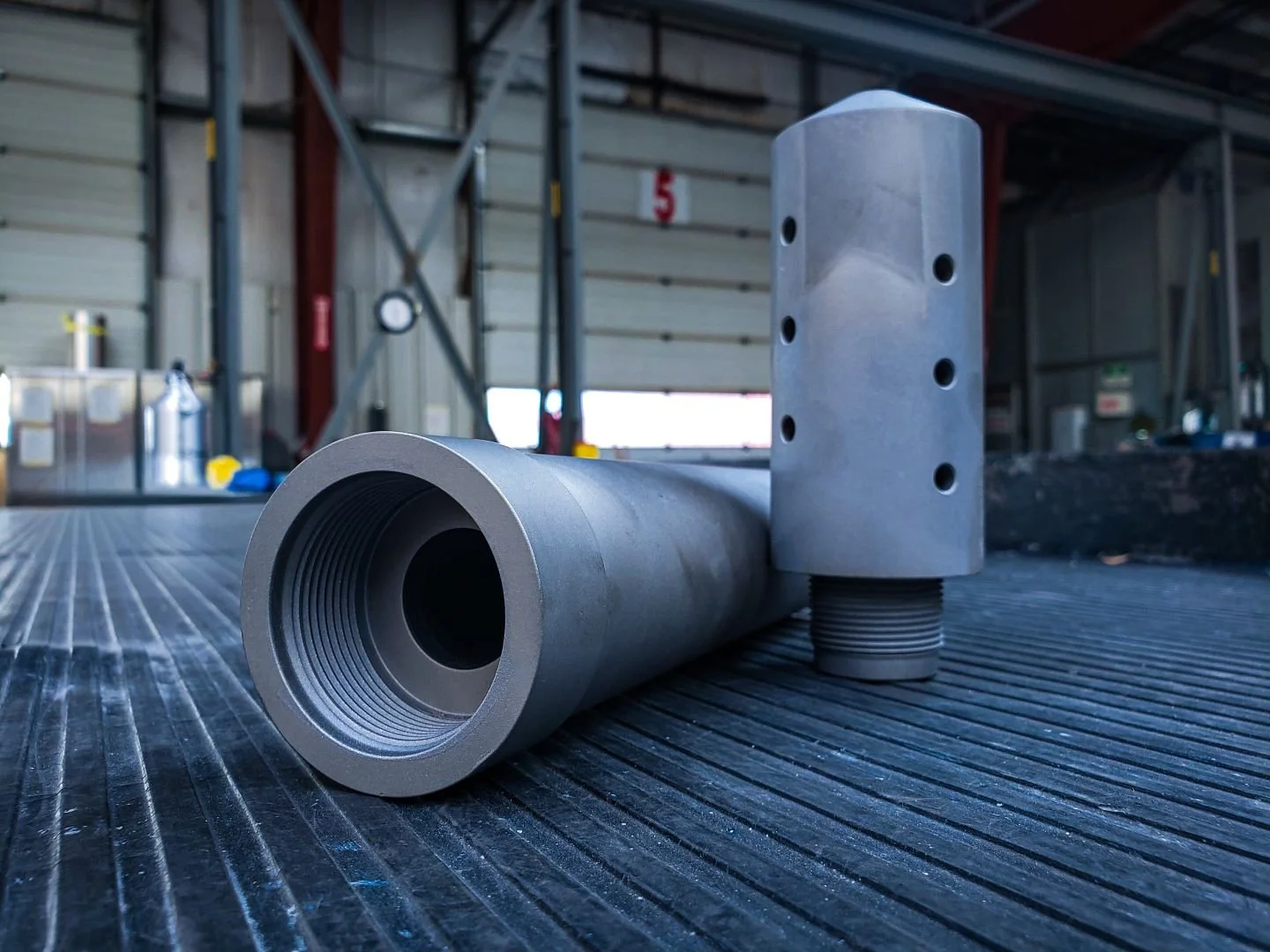
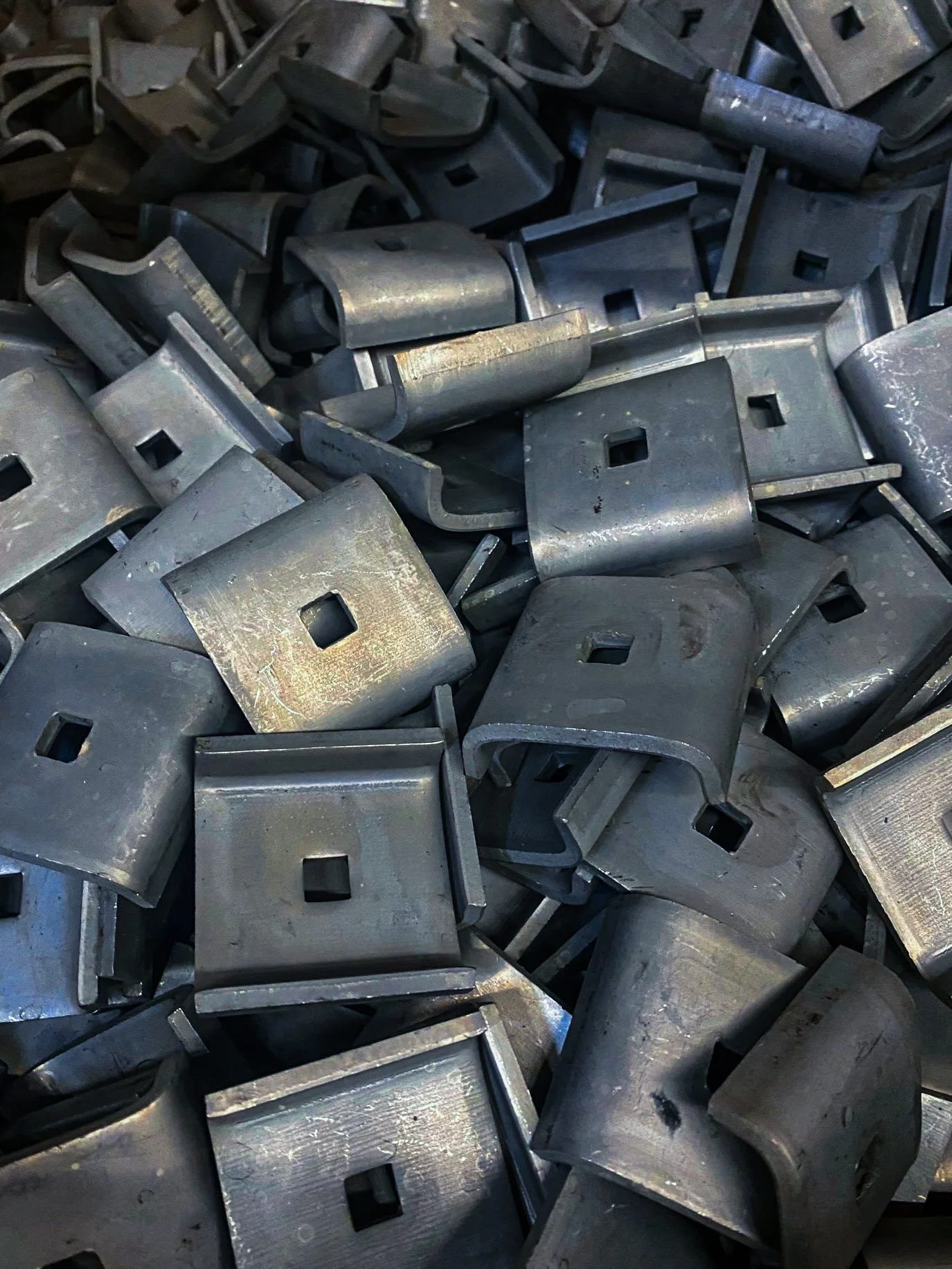
The range of borideable materials is varied, ranging from cast iron, cast steel, and most steel grades to nickel-based alloys and special materials such as Stellite. Materials containing silicon and aluminum are not suitable materials for boronizing. Steels with correspondingly high levels of the elements mentioned can affect the boriding result.
Many properties can be improved by boriding. Thus, boronized surfaces are extremely hard and have a much longer service life compared to functional surfaces such as can be achieved, for example, by nitriding, carburizing, chrome plating, CVD or PVD coating.
The increased resistance to abrasive wear is accompanied by an improved resistance to cavitation. The reduced friction coefficient of boronized surfaces improves the lubricating properties and reduces wear. In the event of a lubricating film break, the boride layer provides excellent emergency running properties, even at high temperatures up to 1000 °C.
Boronizing is widely used in various industries; fittings, power plant technology, gear and transmission technology, textile machinery, pump construction, milling and crushing technology, oil/gas industry, extrusion technique, turbo-charging, agricultural machinery and power tools.
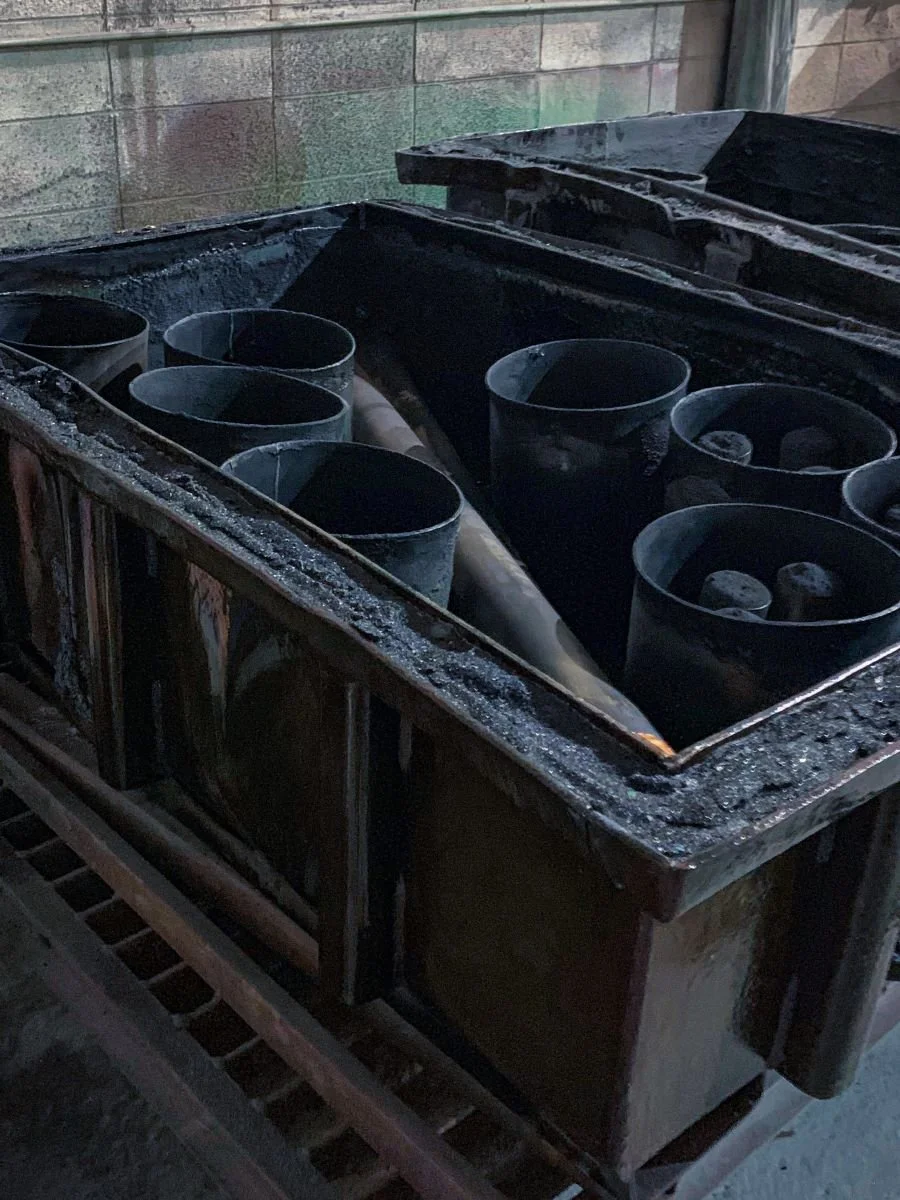
Boronizing Industries & Applications
Boronizing is widely used across many industries to enhance the wear resistance, hardness, and corrosion protection of critical components. Below are the main industries and examples of parts that most commonly receive boronizing treatment:
- Oil & Gas Industry → Wellheads, valve bodies, ball valves, and vavle seats, check valves and gate valves, tubing sections and couplings, and downhole components
- Gear and Transmission Technology → Gears and sprockets, shafts, bearing races, and transmission housings
- Pump Construction → Pump casings, impellers, sealing rings
- Milling and Crushing Technology → Crushing jaws, hammers, milling rollers
- Agricultural Machinery → Plowshares, cutting blades, wear plates
- Power Tools & General Hardware → Drill bits, cutting tools, nuts, bolts, and fastners
- Power Tools & General Hardware → Rollers, guides, and cutting blades
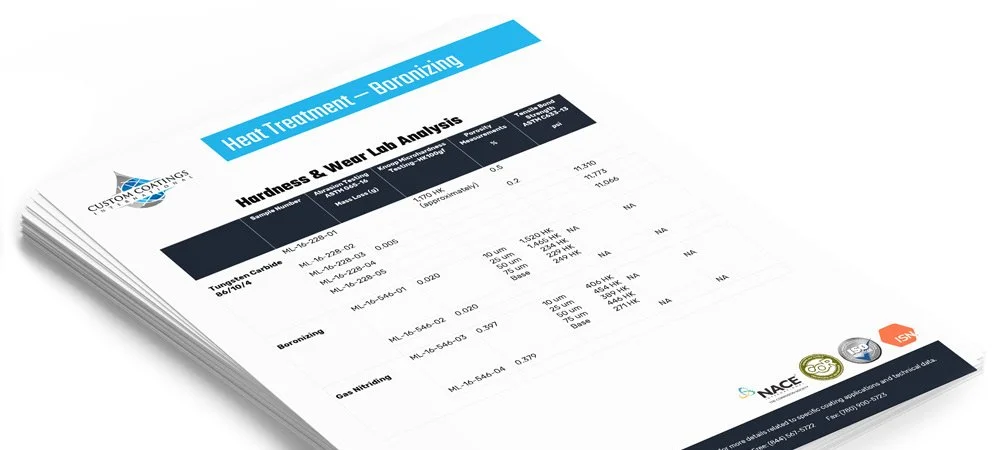
HARDNESS AND WEAR
LAB ANALYSIS
For specifics on how boronizing can help you, download the PDF below..
Let’s Discuss Your Project
Need help finding the right solution? Contact us below or fill out the contact form, and the appropriate customer service specialist will contact you.


Boronizing FAQs
-
Boronized parts have superior hardness (up to 2000 HV), increased wear resistance, improved corrosion resistance, and longer service life in abrasive or corrosive environments.
-
Our boronizing tray dimensions are 4' long, 2'3" wide, and 1' deep, making the process ideal for small- to medium-sized components such as gears, valves, pump parts, and cutting tools.
-
No, machining is not recommended after boronizing due to the surface's extreme hardness. Parts should be machined and finished to final dimensions prior to treatment.