
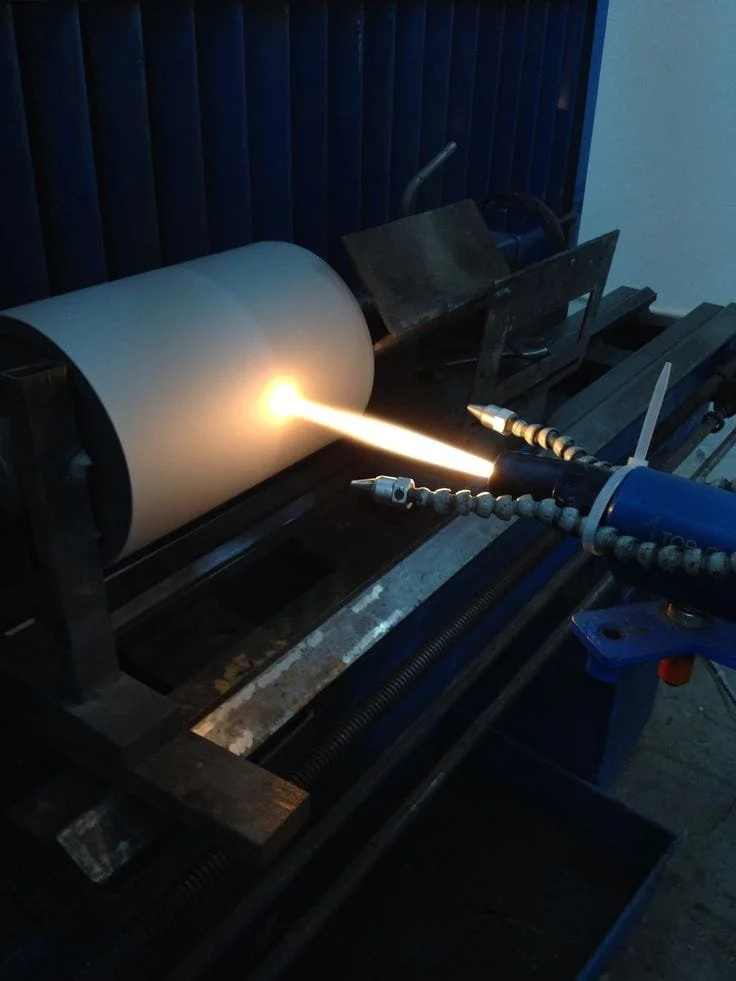
HVOF Coating
HVOF coating services deliver high-density, wear-resistant, and corrosion-resistant coatings for industrial components requiring extreme performance. Contact us to discuss your project and request a quote.

HVOF Coating Overview
What is HVOF coating and its benefits?
HVOF (High Velocity Oxygen Fuel) is a thermal spray coating that uses a fluidized fuel-oxygen mixture fed through a combustion chamber and ignited, creating a high-temperature, high-pressure gas stream that combines with a medium powder and propels it onto the substrate surface. The resulting HVOF coating is dense with low porosity (1–2 vol%), low oxide content (1–2 wt%), and high bond strength (often exceeding 80 MPa). These features provide excellent wear resistance, corrosion protection, and durability.
What are the important factors to consider when specifying HVOF for a project?
When specifying HVOF, project owners should account for three key factors. First, material cost volatility: tungsten carbide pricing fluctuates with global supply chains, so request a current quote before budgeting. Second, applicator capacity: CCI can coat parts up to 10,000 lbs with a powered turntable for consistent, uniform coating on large or cylindrical components. Third, chemical compatibility: HVOF coatings aren't suitable for high-pH environments or hydrofluoric acid exposure, so specify alternative systems where needed.
What are the common uses of HVOF coating?
HVOF is commonly specified for seal areas on shafts, ball and gate valves, hydraulic rams, pump seals, and turbine blades where surface hardness, dimensional precision, and erosion resistance are critical. In oil and gas and rotating equipment applications, HVOF-coated components are routinely specified to extend service intervals and reduce unplanned downtime, making them among the most cost-justifiable coating investments for high-wear service environments.
Why choose Custom Coatings International?
In industries where coating failures can drive excessive repair and maintenance costs, choosing an experienced, proven applicator is critical. With over 30 years of experience applying protective coatings and references including Baker Hughes, CCI has earned a reputation for delivering high-quality coating finishes on time and to specification. Contact us to request a quote or discuss your application.
Common Coating Materials
HVOF spraying supports a wide range of materials, allowing flexibility depending on performance requirements:
- Cermets (e.g. WC/Co, WC/Co/Cr, Cr 3C 2/NiCr, NiCrSiBC)
- Ceramics (e.g. Cr 2O 3, Al 2O 3, ZrO 2)
- Metal alloys (e.g. steels, nickel, chromium and cobalt alloys including NiCrSiB and MCrAlYs)
- Pure metals (e.g. Ni, Cu, Al, Mo, Ti)
- Polymers (e.g. polyester, nylon)
- Composites (e.g. Ni-graphite)
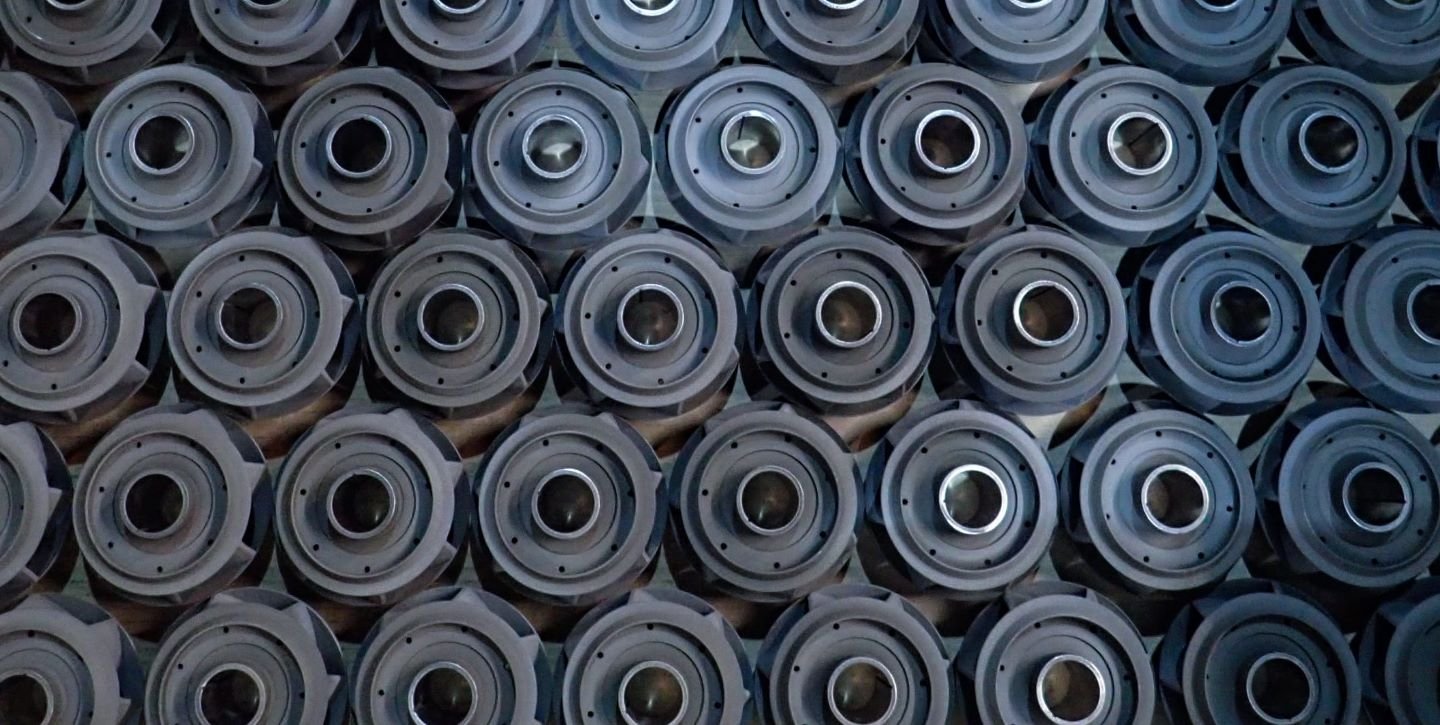
Key Benefits of HVOF Coating
HVOF coatings provide a wide range of mechanical and functional benefits
- High hardness, durability, and toughness
- Abrasion and erosion resistance
- Corrosion resistance in many environments
- Fretting and anti-galling properties
- Long-lasting traction surfaces
Advantages over other coating methods include:
- Higher density and lower porosity due to greater particle impact velocities
- Higher bond strength and cohesive strength within the coating
- Lower oxide content due to reduced in-flight exposure
- Retention of powder chemistry at high temperatures
- Smoother as-sprayed surfaces
- Superior wear resistance and hardness
- Improved corrosion protection due to reduced porosity
- Ability to build thicker coatings with less residual stress
Applications of HVOF Coatings
HVOF spraying primarily applies high-quality cermet coatings such as WC/Co and WC/Co/Cr. Coating thickness typically ranges from 2.0–40.0+ mil DFT (0.002”–0.040”). These coatings enhance the performance of cost-effective, lightweight, or base materials by adding a functional surface layer.
One of the most commonly applied coatings is tungsten carbide 86/10/4 (86% Tungsten Carbide, 10% Cobalt & 4% Chromium). Typical applications include:
- Seal areas on shafts
- Ball and gate valves
- Hydraulic rams
- Pump seals
- Industrial components requiring hard chrome replacement
This coating achieves hardness levels of 1200–1400 Vickers and operates effectively at temperatures up to 500°C (932°F). It provides exceptional hardness, wear resistance, and corrosion protection. However, it is not suitable for high-pH environments or hydrofluoric acid solutions.
Let’s Discuss Your Project
Need help finding the right solution? Contact us below or fill out the contact form, and the appropriate customer service specialist will contact you.


HVOF Coating FAQs
-
HVOF coatings are widely used in oil & gas, aerospace, power generation, mining, pulp and paper, and general industrial applications where components are exposed to severe wear, erosion, or corrosion.
-
Yes. While highly durable, certain HVOF coatings (like tungsten carbide) are not suitable for high-pH environments or hydrofluoric acid exposure. Coating selection must match the operating environment.
-
Most HVOF coatings operate effectively up to 500°C (932°F), though performance may vary based on coating material and application.
-
Yes. Tungsten carbide HVOF coatings are often used as an environmentally friendly and higher-performance alternative to hard chrome plating, especially for hydraulic rams, pump components, and valve surfaces.