
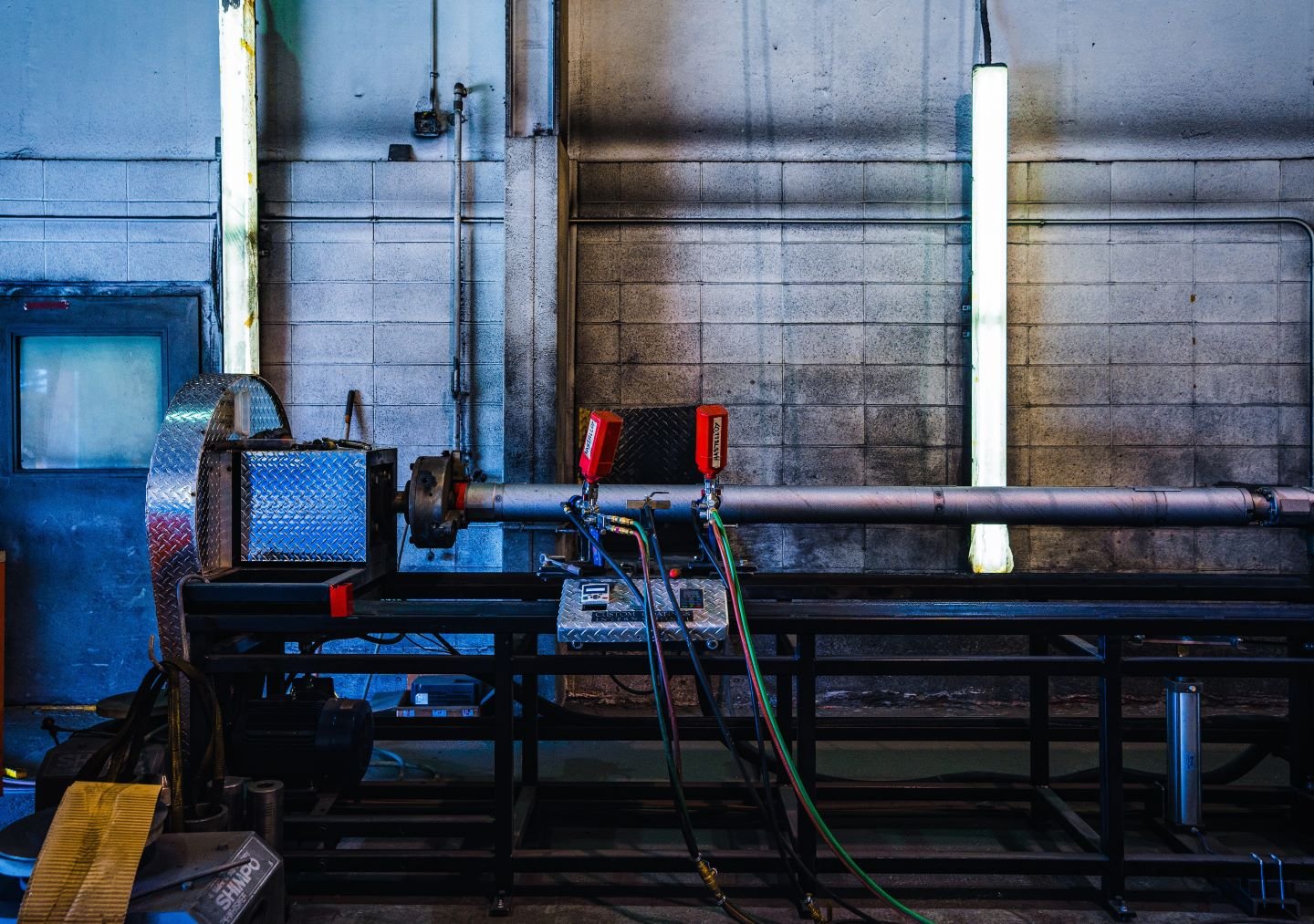
Twin Wire Arc Spray
Twin Wire Arc Spray coatings deliver long-term corrosion protection using aluminum and zinc alloys for industrial and marine applications. Contact us to discuss your project and request a quote.

Spray Arc Overview
What is Spray Arc and its benefits?
Spray Arc (or Twin Wire Arc Spray) is a spray metalizing coating, where a metal wire (either aluminum, zinc, or a 85/15 zinc/aluminum alloy wire) is melted, atomized by compressed air, and propelled forward onto a substrate's surface at temperatures as low as 65 degrees Celsius to avoid metallurgical damage, where the metalizing coating quickly solidifies on a substrate's surface. The dense metalized coating forms a sacrificial corrosion- and wear-resistant layer that absorbs environmental damage that would otherwise directly attack the substrate surface.
What are the pros and cons of Spray Arc Coating?
Spray arc produces a denser, stronger metalized finish than combustion powder spray, with lower operating costs and higher deposition rates — making it the preferred thermal spray method for most large-scale industrial applications. Its primary characteristic to account for is inherent porosity. While effective as a sacrificial barrier, it benefits from sealer application to minimize corrosion. Spray arc is also limited to electrically conductive wire feedstock, so specifications that require metals other than aluminum, zinc, or zinc-aluminum alloys may require an alternative thermal spray process.
When is Spray Arc most used?
Spray Arc is widely specified for corrosion protection of large steel structures (bridges, storage tanks, offshore platforms, and pipeline infrastructure) that require site-applied cold spray metalizing. It is equally valuable for restoring worn components, rebuilding bearing journals, shaft surfaces, and wear faces to original tolerances without the heat distortion risk associated with welding. Primary industries served include oil and gas, energy infrastructure, marine, and civil construction, where long-term corrosion protection and component life extension are critical operational priorities.
Why choose Custom Coatings International?
In industries where coating failures can drive excessive repair and maintenance costs, choosing an experienced, proven applicator is critical. With over 30 years of experience applying protective coatings and references including Baker Hughes, CCI has earned a reputation for delivering high-quality coating finishes on time and to specification. Contact us to request a quote or discuss your application.
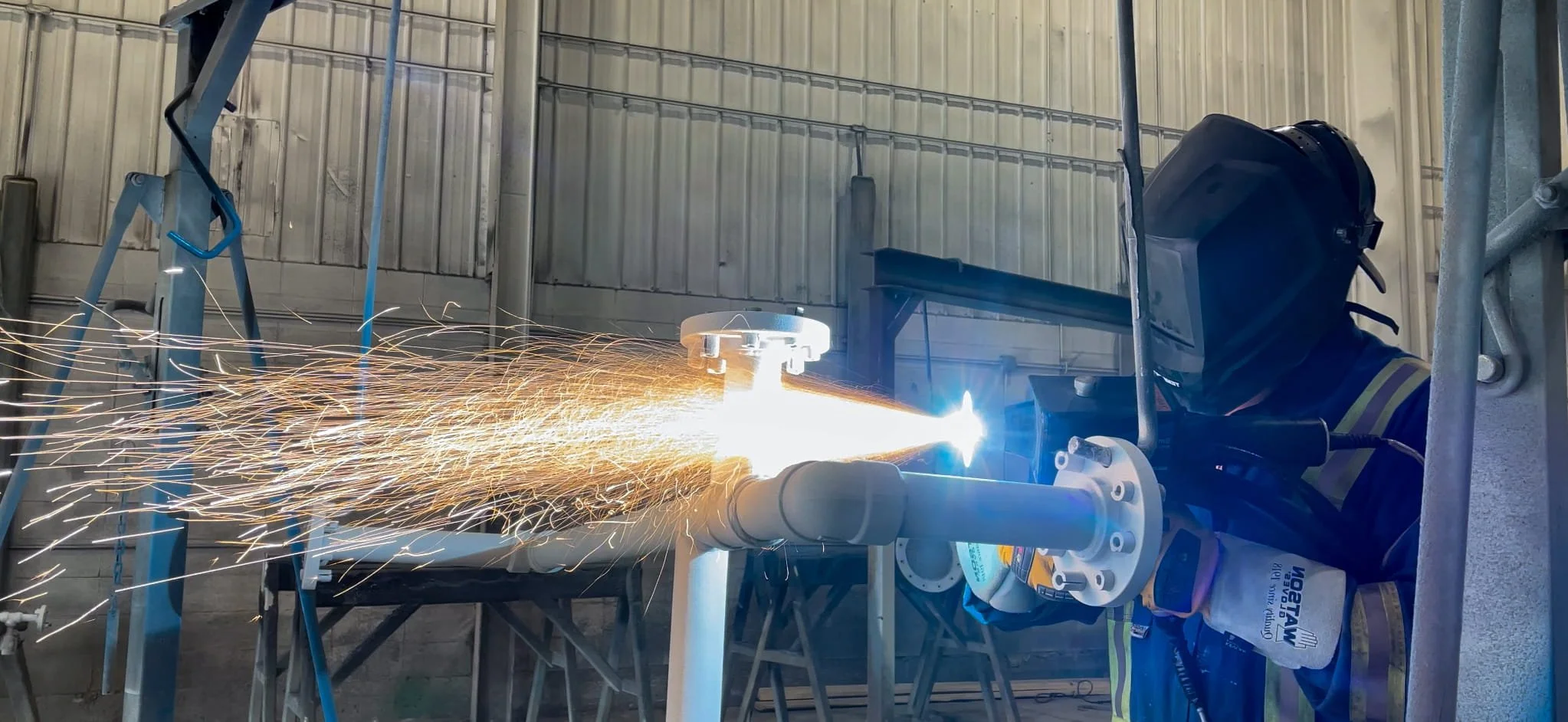
Twin Wire Arc Spray Technology
Of the available application methods, Twin Wire Arc Spray is the most productive and cost-effective, offering higher deposition rates than other coating systems. This process energizes two conductive wires with DC power, one positive and one negative, which meet in a gun head and arc against each other. The arc melts the metal, creating coating material that is propelled onto the substrate.
One major advantage of Twin Wire Arc Spray is its low heat application, with surface temperatures kept as low as 65 °C. This ensures no metallurgical damage or distortion while making it possible to rebuild worn areas back to their original dimensions. The coatings, which typically use aluminum, zinc, or zinc-aluminum alloys, act as anodic layers that sacrifice themselves to prevent steel corrosion. While arc spray coatings are naturally porous, sealers can be applied to slow the galvanic dissolution process and enhance long-term performance.
When sealed properly, these coatings can provide 50 years or more of corrosion protection, surpassing traditional galvanizing. Aluminum and zinc-aluminum alloys, in particular, offer strong resistance in aggressive environments, maintaining structural integrity while offering sacrificial protection.
Common Industrial Paint Coatings Applications
Thermal Sprayed Aluminum coatings provide a range of high-performance benefits that go beyond basic corrosion protection. Unlike conventional paint systems, TSA creates a metallurgically bonded layer that enhances durability in ways other coatings cannot. Some of the unique advantages include:
- Excellent long-term resistance to atmospheric and marine corrosion.
- Low application temperature prevents heat distortion or metallurgical changes in steel substrates.
- Easy repair and rebuild capability for worn or corroded surfaces.
- Compatibility with sealers to extend service life even further.
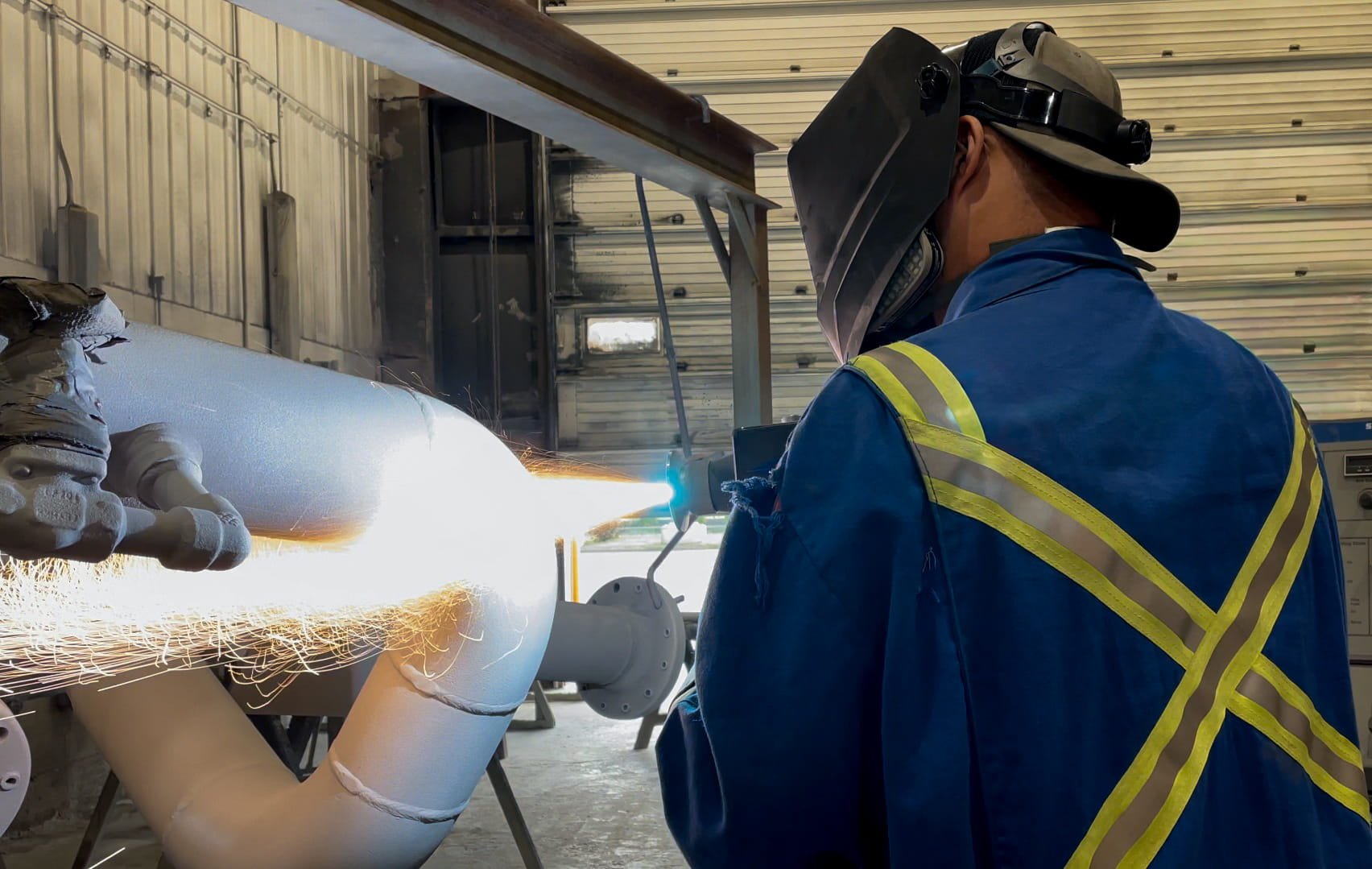

Industrial Benefits & Applications of Arc Spray Coatings
- Prolongs the lifespan of parts.
- Provides anti-fretting and anti-galling protection.
- Enhances structural integrity and durability.
- Reduces downtime, maintenance, and replacement costs in facilities.
- Protects equipment used in marine applications that are constantly immersed or submerged in seawater.
- Offers strong chemical resistance.
- Extends the lifespan of public-use structures including bike paths, playground equipment, and utilities.
- Reduces heat transfer
- Improves fatigue strength in stressed components.
- Protects against cavitation damage on pumps and hydraulic parts.
Let’s Discuss Your Project
Need help finding the right solution? Contact us below or fill out the contact form, and the appropriate customer service specialist will contact you.


Twin Wire Arc Spray – Thermal Sprayed Aluminum Coating FAQs
-
Twin Wire Arc Spray uses two energized wires that arc against each other to create molten material, which is then sprayed onto the surface. It offers higher deposition rates, lower costs, and more consistent coverage than many other thermal spray processes.
-
TSA coatings provide longer-lasting corrosion protection (often 50+ years), resist high temperatures, prevent distortion due to their low-heat application, and can be sealed for even greater durability. Unlike paint, TSA creates a metallurgically bonded layer that does not peel or flake.
-
Common industries include offshore oil and gas, marine, energy, infrastructure, utilities, and manufacturing. Applications range from pipelines, offshore platforms, and ship hulls to bridges, tanks, playground structures, and bike paths.