
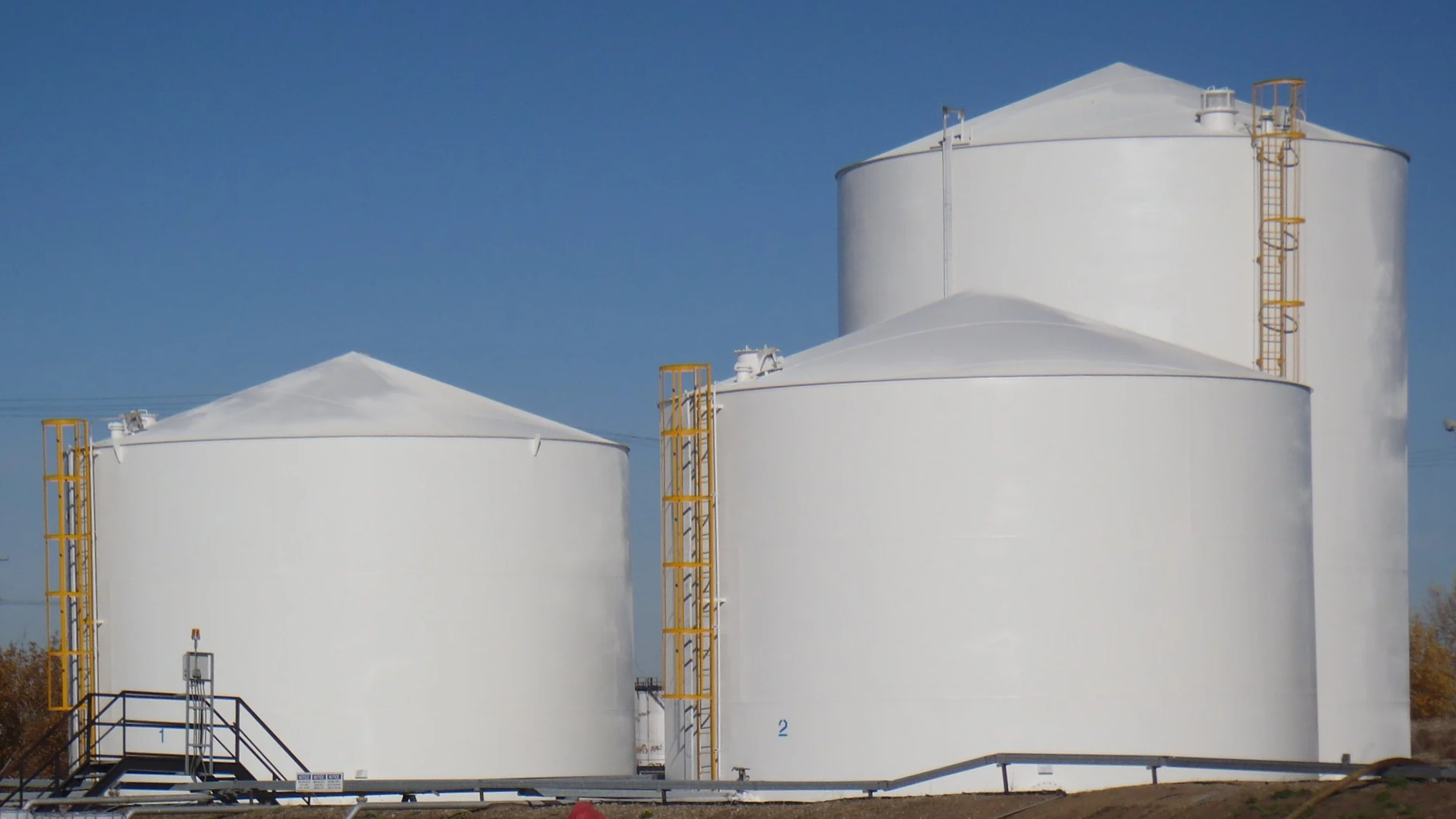
TANK COATINGS & LINING SERVICES ALBERTA
Custom Coatings International protects storage tanks from corrosion and contamination with coatings and linings applied precisely to your specifications. Our NACE Level 2 & 3 certified inspectors perform the inspections and testing your specification requires, with full documentation to verify quality. We serve the oil and gas, water and wastewater, chemical storage, and agricultural industries across Alberta. Send us your specification to request a quote.
TRUSTED TANK COATINGS & LINING SERVICES
Like pipelines and flow control components, storage tanks and vessels corrode throughout their service life. A coating system suited to the service environment is essential to mitigate corrosion and extend asset life, but even a well-specified coating is only as effective as its application. Improper surface preparation or application can leave holidays and other coating defects that lead to premature failure. The resulting damage can mean costly downtime and lost production, environmental liability, and the expense of repairing or replacing tanks and vessels.
Custom Coatings International’s NACE Level 2 certified inspectors perform the inspections and testing your specification requires, with full documentation to verify application quality. NACE Level 3 certified inspectors are available upon request. With more than 30 years of protective coating experience, we apply tank coatings and linings in both shop and field environments.
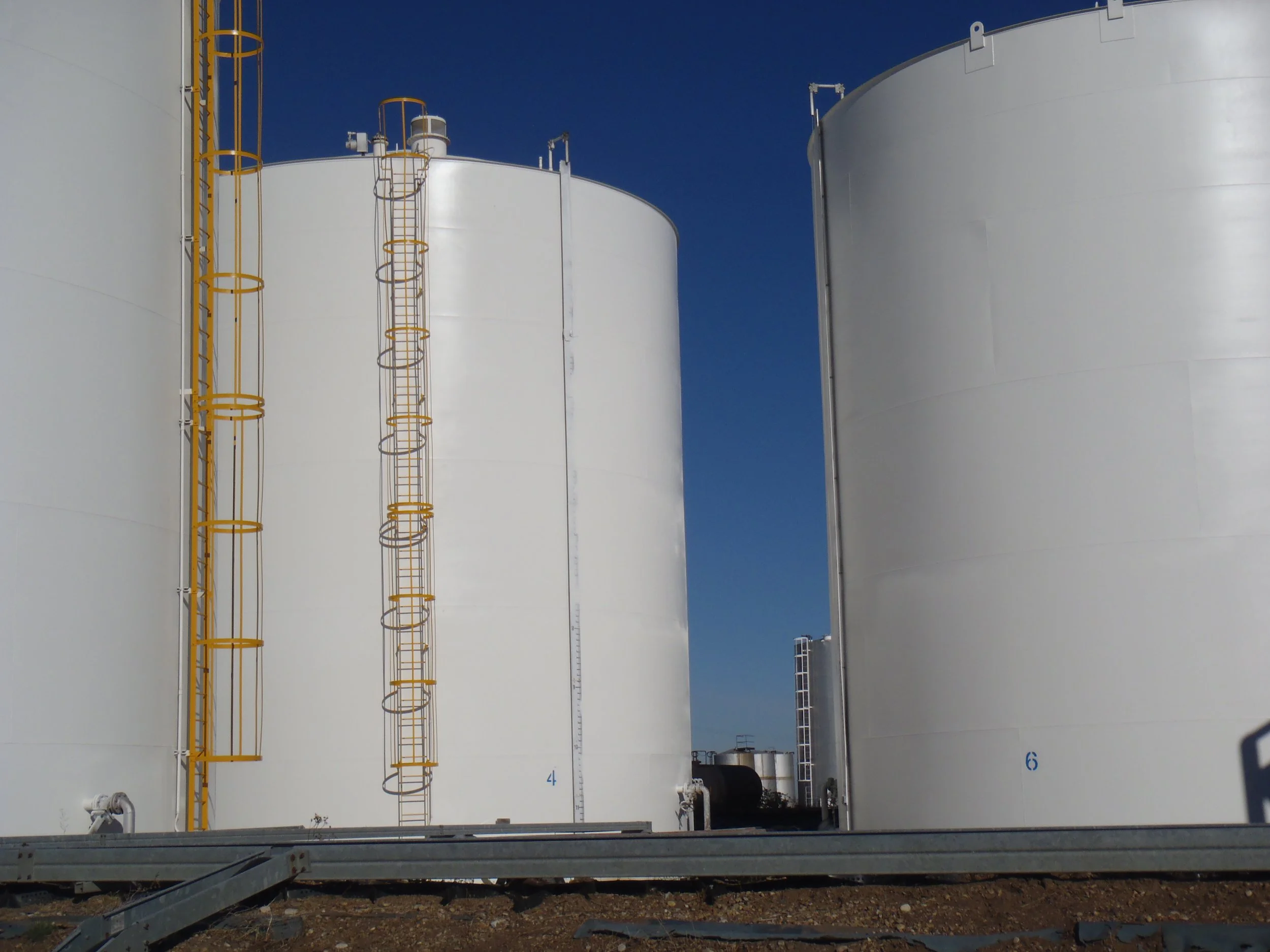
Industrial tank & vessel coatings are a specialized coating system designed to protect the tank & vessel substrate from several degradation factors, including:
- Chemical and Corrosive Wear → protection against aggressive chemicals such as various acids, salts, and industrial solvents. Corrosion can occur both internally (caused by the internal storage fluids) and externally (caused by environmental factors). It is a primary cause of asset damage, making it a key factor to mitigate with industrial coatings.
- Mechanical Wear → sRefers to abrasive and impact wear for tanks & vessels. Mechanical wear can occur internally due to storing abrasive contents and cyclic filling & emptying. Externally, tanks can undergo mechanical wear during transport & installation, as well as environmental damage.
- Thermal Wear → Temperature fluctuations and cycling cause the coating and substrate to expand and contract at different rates, which can lead to cracking and loss of adhesion. Thermal wear can damage industrial tank/vessel coatings internally and externally.
WHAT ARE TANK COATINGS & LININGS?

TANK COATINGS & LINING OPTIONS
Custom Coatings International applies tank & vessel coating to specification with accuracy and consistency. For projects without a defined specification, Custom Coatings International consults with our coating manufacturers' technical specialists to develop a specification that mitigates wear and extends service life. Please note Custom Coatings International does not apply sheet or rubber tank linings. Below are the tank coatings we commonly apply:
- 100% Solids Epoxy Coatings → offer excellent adhesion to steel, with strong corrosion protection and chemical resistance. 100% Solids Epoxy coatings are common, as their high build and technical features make them the preferred coating type for asset owners seeking reliable protection. Epoxy coatings are typically specified for potable & non-potable water, chemical, and fuel storage tanks.
- Polyurethane Coatings → are flexible, mechanically wear-resistant, and can provide strong UV resistance in select coatings. It is commonly specified for outdoor applications as a topcoat in external coating systems because it offers strong protection against environmental wear factors.
- Zinc-Based Coatings → provide electrochemical protection, as zinc acts as an anode to the iron/steel substrate and oxidizes before the tank/vessel substrate. Zinc works best as a primer or protective layer for outdoor environments in corrosively aggressive atmospheres.
HOW TO SPECIFY A TANK COATING FOR YOUR APPLICATION
Custom Coatings International takes a consultative approach on projects where the specification hasn’t been defined. With contacts to technical specialists at leading protective coating suppliers, Custom Coatings International ensures the quality of our application services on your most critical assets. When selecting the best coating system option, it is important to account for:
- Chemical Exposure: When selecting an industrial tank coating, it's important to identify the fluids/chemicals and their percentages. Different coatings offer specialized strengths for specific chemicals.
- Specification Standards: In some cases, you must follow specific water or chemical standards to ensure contaminant safety. For example, for potable water tanks & vessels, all coating specifications must comply with standards such as NSF/ANSI/CAN 61.
- Operating Temperature: The operating temperature range of the tank & vessel must be accommodated, as coating breakdown can occur if the substrate or fluid content exceeds the coating supplier's recommended temperature range.
- Tank & Vessel Material: Different substrate materials, such as steel, concrete, & fiberglass, require different considerations for surface preparation and coating systems. Adhesion to the substrate is crucial for long-term asset protection.
- Mechanical Wear Resistance: Abrasion and impact damage commonly occur during transportation and installation. Asset owners should consider the tank/vessel handling process before applying coating to ensure an additional layer isn’t needed to prevent mechanical wear.
- Internal and/or External Coating: Internal coating protects the substrate from its internal fluid content, while external coating protects the substrate from the environment. Each coating system provides different specialized treatment to different coating breakdown threats. Before coating, identify the threats you aim to protect against so you can select the right coating system.
TANK & VESSEL COATING INDUSTRIES
Oil & Gas
Petrochemical & Chemical Refining
Water & Wastewater Management
Agricultural & Food Production

WHY CHOOSE CUSTOM COATINGS INTERNATIONAL?
CCI has invested significant resources in building and strengthening our quality assurance and control department, training our team to ensure every project meets specifications.
Credentials
- ISO 9001-certified, ISN member contractor, and COR-certified
- NACE Level 1 & 2 Certified Coating Inspectors on staff, with NACE Level 3 Certified Coating Inspectors available upon request
Quality Assurance & Control
- Surface preparation to SSPC/NACE standards, with profile measured and recorded per specification
- Climate-controlled blast and coating bays for proper application and cure
- QC testing, including ambient condition monitoring and DFT readings provided in every project
- X-cut adhesion, compressed air (blotter), dust, and soluble salt testing, and holiday testing available upon request
- Inspection and Test Plans (ITPs) and QC documentation available upon request

REQUEST A QUOTE
To initiate the quoting process, please provide the following information (if available):
• Drawings or isometrics
• Coating specifications
• Operating environment details (temperature range and chemical exposure)
• Project timeline or required completion date
We look forward to working with you on finding the right protective coating for your project. If you have any questions, please contact us using the links below.

Info@ccintl.ca for general inquiries

sales.support@ccintl.ca for quote requests